At the end of this page, you can find the full list of publications. All papers are also available on Google Scholar.
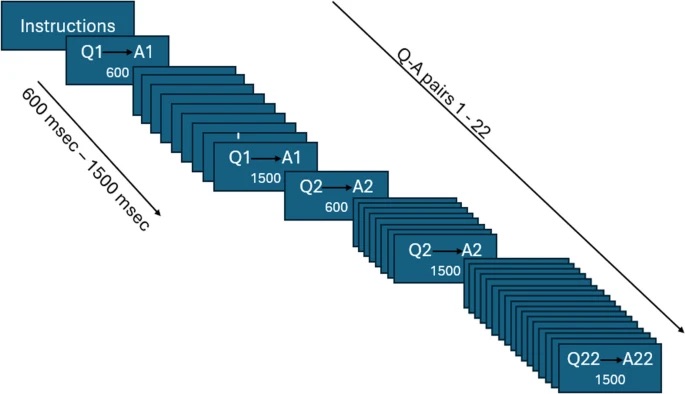
This study investigates the conversational sense that an inter-turn silence has lasted too long, finding that the feeling is driven by the typical response time for that specific question, not by a participant’s general time perception biases or anxiety levels.
AM Thomas, MP Kaschak
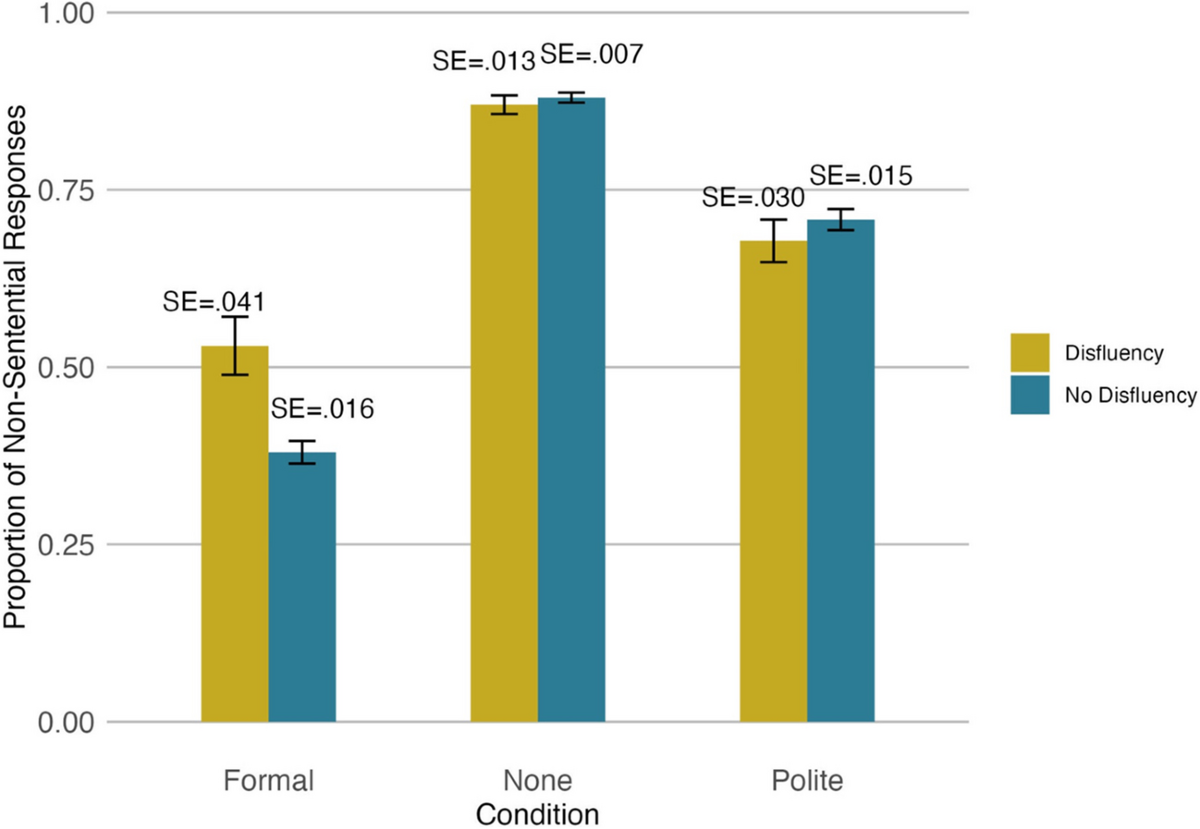
Speakers’ use of short answers instead of full sentences is primarily determined by pragmatic goals like politeness and formality, with memory retrieval playing a more complex, context-dependent role.
CM Brousse, K Chia, M Kaschak
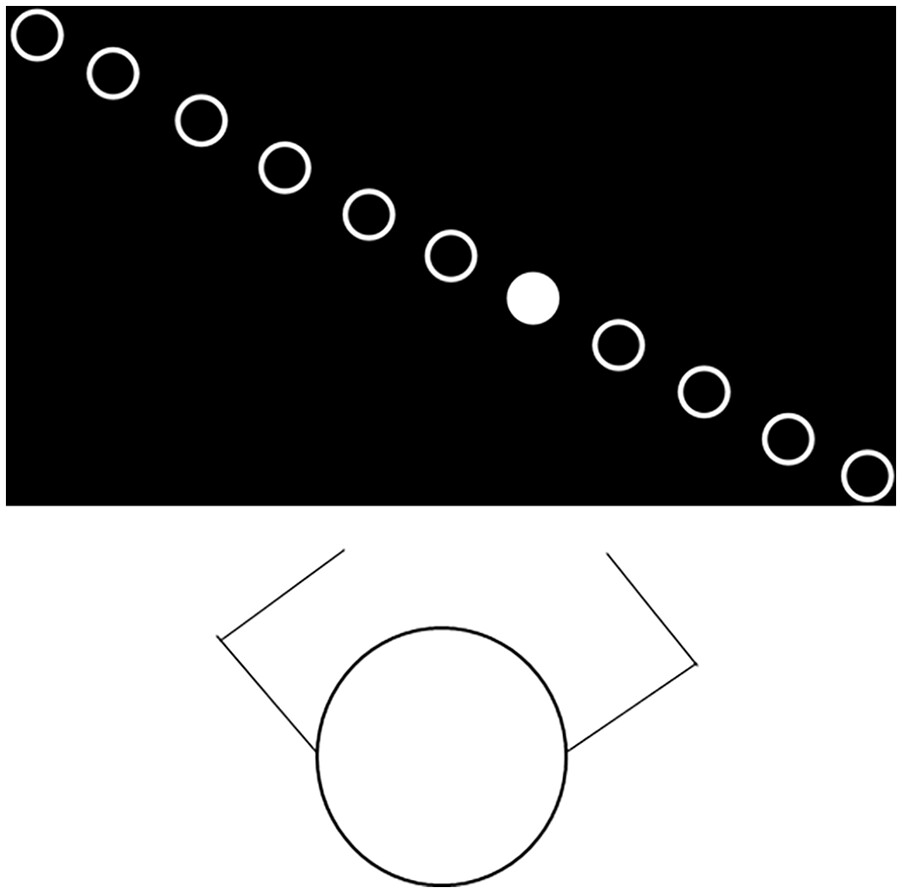
This research demonstrates that the tendency to repeat a recent choice (hysteresis) occurs in both motor planning (reaching) and linguistic choices (selecting “this” vs. “that”), although some effects, like a speed advantage for repetition, were only observed in the motor task.
M Long, MP Kaschak

This chapter provides an overview of embodied approaches to language comprehension, examining the supporting evidence, recent criticisms, and future outlook for the field.
MP Kaschak, M Long, J Madden
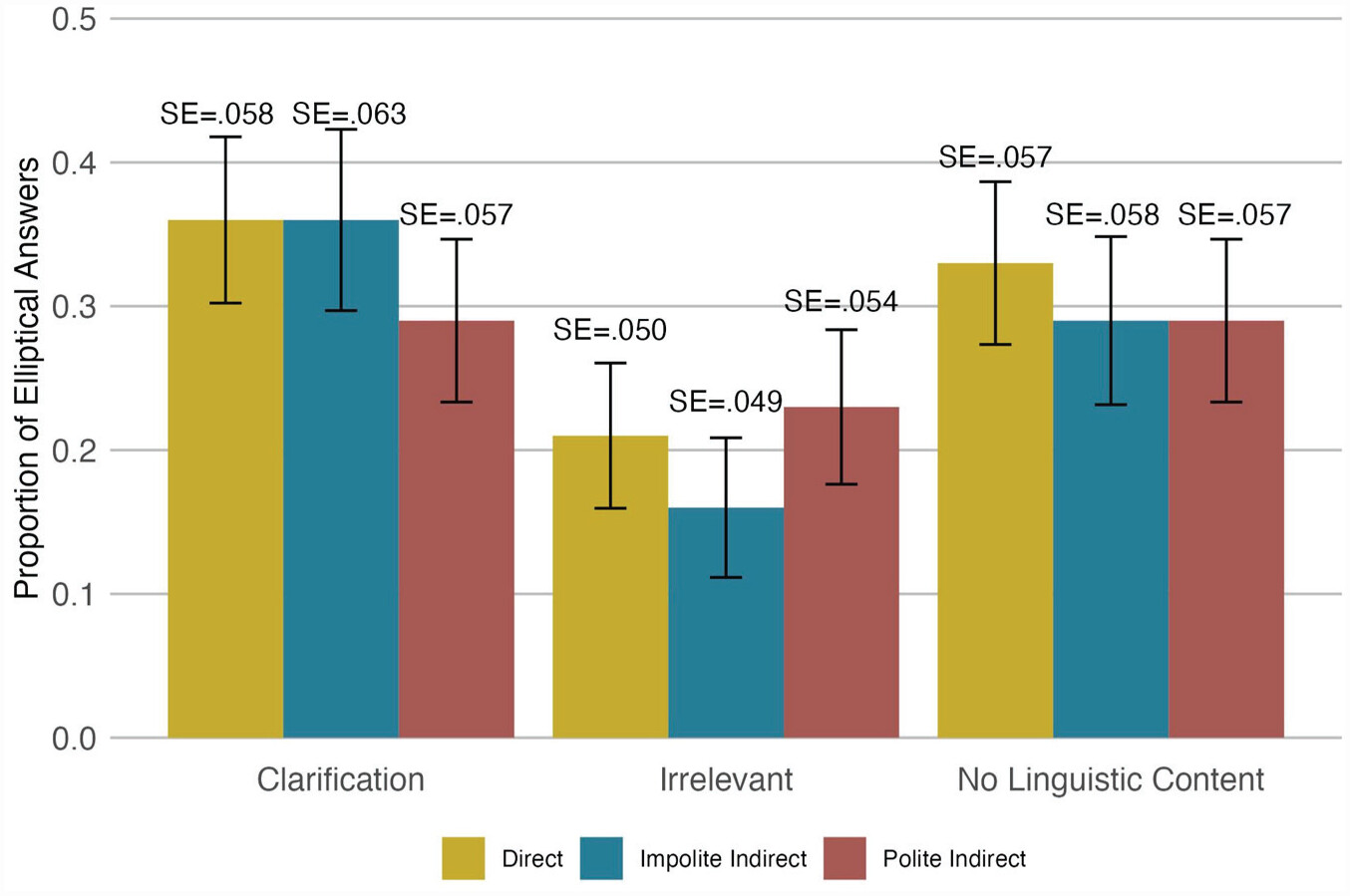
This research demonstrates that speakers are more likely to provide short, elliptical answers (e.g., “At 9”) to direct questions than to indirect or polite ones, and are less likely to do so if interrupted or if they experience difficulty retrieving the answer.
K Chia, MP Kaschak
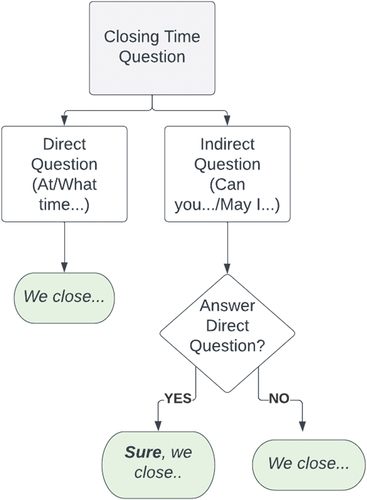
This study, based on three experiments and a large dataset of over 43,000 phone calls to businesses, found that structural priming in answers was not affected by whether the question was a direct, conventional indirect, or nonconventional indirect request.
K Chia, AA Edwards, C Schatschneider, MP Kaschak
Morey, R. D., Kaschak, M. P.,…Zwaan, R. A. (2022). A pre-registered multi-lab non-replication of the Action-sentence Compatibility Effect (ACE). Psychonomic Bulletin and Review, 29, 613-626. https://doi.org/10.3758/s13423-021-01927-8
Chia, K., & Kaschak, M. P. (2022). Structural priming in question-answer dialogues. Psychonomic Bulletin and Review, 29, 262-267. https://doi.org/10.3758/s13423-021-01976-z
Eligio, R. B., & Kaschak, M. P. (2020). Gaming experience affects the interpretation of ambiguous words. PLoS One, 15, e0243512. https://doi.org/10.1371/journal.pone.0243512
Chia, K., Hetzel-Ebben, H., …, & Kaschak, M. P. (2020). Examining the factors that affect structural repetition in question answering. Memory and Cognition, 48, 1046-1060. https://doi.org/10.3758/s13421-020-01036-2
Yazbec, A., Borovsky, A., & Kaschak, M. P. (2019). Examining the impact of text style and epistemic beliefs on conceptual change. PLoS One, 14, e0220766. https://doi.org/10.1371/journal.pone.0220766
Yazbec, A., Kaschak, M. P., & Borovsky, A. (2019). Developmental Timescale of Rapid Adaptation to Conflicting Cues in Real-Time Sentence Processing. Cognitive Science, 43, 1-41. https://doi.org/10.1111/cogs.12704
Haeffel, G. J., & Kaschak, M. P. (2019). Rethinking How We Think About Cognitive Interventions for Depression: An Example from Research on Second Language Acquisition. Clinical Psychological Science, 7, 68-76. https://doi.org/10.1177/2167702618794157
Chia, K., Axelrod, C., Johnson, C., … & Kaschak, M. P. (2019). Structural repetition in question answering: A replication and extension of Levelt and Kelter (1982). Discourse Processes, 56, 2 – 23. https://doi.org/10.1080/0163853X.2018.1515556
Connor, C. M., Phillips, B., Kim, Y. – S. Lonigan, C., Kaschak, M. P., Crowe, E., Dombek, J., Al Otaiba, S. (2018). Examining the efficacy of targeted component interventions on language and literacy for third and fourth graders who are at risk of comprehension difficulties. Scientific Studies of Reading, 22, 462-484. https://doi.org/10.1080/10888438.2018.1481409
Kutta, T. J., Kaschak, M. P., Porcellini, A., & Jones, J. L. (2017). Implicit and explicit memory factors in cumulative structural priming. Collabra, 3, 13. https://doi.org/10.1525/collabra.59
Kaschak, M. P., Connor, C. M., & Dombek, J. L. (2017). Enacted Reading Comprehension: Using bodily movement to aid the comprehension of abstract text content. PLoS One, 12, e0169711. https://doi.org/10.1371/journal.pone.0169711
Erickson, L. C., Kaschak, M. P., Thiessen, E. D., & Berry, C. A. S. (2016). Individual differences in statistical learning: Conceptual and measurement issues. Collabra, 2(1), p.14. DOI: https://doi.org.10.1525.collabra.41
Connor, C. M., Day, S. L., Phillips, B. P., Sparapani, N., McLean, N., Barrus, A., & Kaschak, M. P. (2016). Reciprocal effects of self-regulation, semantic knowledge, and reading comprehension in early elementary school. Child Development, 87, 1813-1824. https://doi.org/10.1111/cdev.12570
Spencer, M., Kaschak, M. P., Jones, J. L., & Lonigan, C. J. (2015). Statistical learning is related to early literacy-related skills. Reading and Writing, 28, 467-490. https://doi.org/10.1007/s11145-014-9533-0
Connor, C. M., Phillips, B. M., Kaschak, M. P., Apel, K., Kim, Y-S., Al Otaiba, S., Crowe, E. C., Thomas-Tate, S., Johnson, L. C., & Lonigan, C. J. (2014). Comprehension tools for teachers: Reading for understanding from pre-kindergarten through fourth grade. Educational Psychology Review, 26, 379-401. https://doi.org/10.1007/s10648-014-9267-1
Kaschak, M. P., Kutta, T. J., & Coyle, J. M. (2014). Long and short term cumulative structural priming effects. Language, Cognition and Neuroscience, 29, 728-743. https://doi.org/10.1080/01690965.2011.641387
Coyle, J. M., & Kaschak, M. P. (2012). Female fertility affects men’s linguistic choices. PLoS One, 7, 1-7. https://doi.org/10.1371/journal.pone.0027971
Jones, J. L., & Kaschak, M. P. (2012). Global statistical learning in a visual search task. Journal of Experimental Psychology: Human Perception and Performance, 38, 152-160. https://doi.org/10.1037/a0026233
Kutta, T. J., & Kaschak, M. P. (2012). Changes in task extrinsic context do not affect the persistence of long-term cumulative structural priming. Acta Psychologica, 141, 408-414. https://doi.org/10.1016/j.actpsy.2012.09.007
Sell, A. J., & Kaschak, M. P. (2012). The comprehension of sentences involving quantity information affects responses on the up-down axis. Psychonomic Bulletin and Review, 19, 708-714. https://doi.org/10.3758/s13423-012-0263-5
Kaschak, M. P., Kutta, T. J., & Jones, J. L. (2011). Structural priming as implicit learning: Cumulative priming effects and individual differences. Psychonomic Bulletin and Review, 18, 1133-1139. https://doi.org/10.3758/s13423-011-0157-y
Kaschak, M. P., Kutta, T. J., & Schatschneider, C. (2011). Long-term cumulative structural priming persists for (at least) one week. Memory and Cognition, 39, 381-388. https://doi.org/10.3758/s13421-010-0042-3
Sell, A. J., & Kaschak, M. P. (2011). Processing time shifts affects the execution of motor responses. Brain and Language, 117, 39-44. https://doi.org/10.1016/j.bandl.2010.07.003
Coyle, J. M., & Kaschak, M. P. (2008). Patterns of experience with verbs affects long-term cumulative structural priming. Psychonomic Bulletin and Review, 15, 967-970. https://doi.org/10.3758/PBR.15.5.967
Kaschak, M. P., & Borreggine, K. L. (2008). Is long-term structural priming affected by patterns of experience with individual verbs? Journal of Memory and Language, 58, 862- 878. https://doi.org/10.1016/j.jml.2006.12.002
Kaschak, M. P., & Borreggine, K. L. (2008). Temporal dynamics of the action-sentence compatibility effect. Quarterly Journal of Experimental Psychology, 61, 883-895. https://doi.org/10/1080/17470210701623852
Dijkstra, K., Kaschak, M. P., & Zwaan, R. A. (2007). Body position facilitates retrieval of autobiographical memories. Cognition, 102, 139-149. https://doi.org/10.1016/j.cognition.2005.12.009
Kaschak, M. P. (2007). Long-term structural priming affects subsequent patterns of language production. Memory and Cognition, 35, 925-937. https://doi.org/10.3758/BF03193466
Borreggine, K. L., & Kaschak, M. P. (2006). The action-sentence compatibility effect: It’s all in the timing. Cognitive Science, 30, 1097-1112. https://doi.org/10.12007/s15516709cog0000_91
Kaschak, M. P. (2006). What this construction needs is generalized. Memory and Cognition, 34, 368-379. https://doi.org/10.3758/BF03193414
Kaschak, M. P., Loney, R. A., & Borreggine, K. L. (2006). Recent experience affects the strength of structural priming. Cognition, 99, B73-B82. https://doi.org/10.1016/j.cognition.2005.07.002
Kaschak, M. P., & Saffran, J. R. (2006). Idiomatic syntactic constructions and language learning. Cognitive Science, 30, 43-63. https://doi.org/10/1207/s15516709cog0000_44
Kaschak, M. P., Zwaan, R. A., Aveyard, M., & Yaxley, R. H. (2006). Perception of auditory motion affects sentence processing. Cognitive Science, 30, 733-744. https://doi.org/10.1207/s15516709cog0000_54
Kaschak, M. P., Madden, C. J., Therriault, D. J., Yaxley, R. H., Aveyard, M. E., Blanchard, A. A., & Zwaan, R. A. (2005). Perception of motion affects language processing. Cognition, 94, B79-B89. https://doi.org/10.1016/j.cognition.2004.06.005
Borghi, A. M., Glenberg, A. M., & Kaschak, M. P. (2004). Putting words in perspective. Memory and Cognition, 32, 863-873. https://doi.org/10.3758/BF03196865
de Vega, M., Robertson, D. A., Glenberg, A. M., Kaschak, M. P., & Rinck, M. (2004). On doing two things at once: Temporal constraints on actions in language comprehension. Memory and Cognition, 32, 1033-1043. https://doi.org/10.3758/BF03196879
Glenberg, A. M., Gutierrez, T., Levin, J., Japuntich, S., & Kaschak, M. P. (2004). Activity and imagined activity can enhance young children’s reading comprehension. Journal of Educational Psychology, 96, 424-436. https://doi.org/10.1037/0022-0663.96.3.424
Kaschak, M. P., & Glenberg, A. M. (2004). This construction needs learned. Journal of Experimental Psychology: General, 133, 450-467. https://doi.org/10.1037/0096-3445.133.3.450
Gernsbacher, M. A. & Kaschak, M. P. (2003). Neuroimaging studies of language production and comprehension. Annual Review of Psychology, 54, 91-114. https://doi.org/10.1146/annurev.psych.54.101601.145128
Glenberg, A. M., & Kaschak, M. P. (2002). Grounding language in action. Psychonomic Bulletin and Review, 9, 558-565. https://doi.org/10.3758/BF03196313
Kaschak, M. P., & Glenberg, A. M. (2000). Constructing meaning: The role of affordances and grammatical constructions in sentence comprehension. Journal of Memory and Language, 43, 508-529. https://doi.org/10.1006/jmla.2000.2705